


The Religio Medici And Other Writings Of Sir Thomas Browne
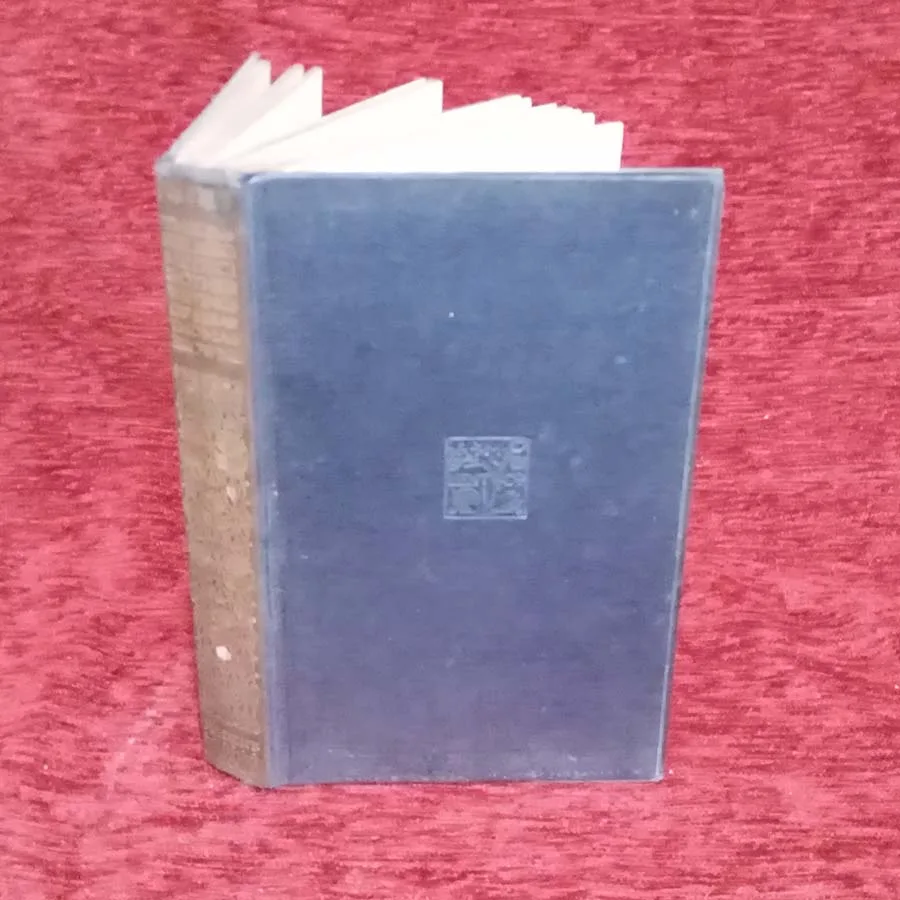
Publisher: JM Dent
Format: Hardback
ISBN: none
Ah yes, The Religio Medici and Other Writings of Sir Thomas Browne — a book that quietly demonstrates that the seventeenth century contained people capable of writing sentences so elaborate that modern prose looks like it has been put on a strict diet.
This Everyman’s Library edition, published by J. M. Dent and printed by Billings and Sons Ltd., Guildford, most likely dates from somewhere between c.1925 and 1939, a period when publishers still believed that the general reading public might enjoy dipping into the thoughts of a philosophically inclined physician who could move from theology to zoology, mortality, curiosity, and the oddity of existence without the slightest concern for the reader’s comfort.
Sir Thomas Browne himself (1605–1682) was a doctor, scholar, collector of strange ideas, and master of the sort of English prose that appears to unfold in stately spirals. Religio Medici — “The Religion of a Doctor” — began life as a private meditation before accidentally becoming one of the most widely read intellectual works of the seventeenth century. Which is exactly the sort of literary accident that the seventeenth century specialised in: a thoughtful manuscript circulates among friends, someone prints it, and suddenly half of Europe is discussing it.
Browne’s mind was a curious place. He could contemplate the nature of faith, the mysteries of the universe, the habits of animals, the frailty of the human body, the vanity of worldly ambition, and the deep strangeness of existence, all in a style so ornate that even the commas appear to have university degrees. Reading Browne is less like following an argument and more like wandering through a beautifully furnished intellectual mansion where every room contains a cabinet of curiosities.
This Everyman’s Library edition belongs to that admirable early twentieth-century mission of putting the great works of civilisation into compact, affordable volumes. J. M. Dent’s ambition was nothing less than to create a library for everyone — hence the name — allowing ordinary readers to keep Plato, Shakespeare, Montaigne, Dante, Browne and countless others within reach of the domestic bookshelf rather than locked away in rarefied academic towers.
Physically, the book has that quietly dignified soft-hardback format typical of many Everyman volumes — a sturdy cloth binding that behaves like a hardback but carries itself with the modesty of a book designed to be handled, read, re-read, and occasionally forgotten on a train. The plain boards and restrained publisher device give it the calm appearance of a volume that knows perfectly well it contains four centuries of thoughtful English prose and therefore has no need for theatrical decoration.
And what prose it is. Browne writes with a kind of cultivated wonder at the world: a mixture of science, faith, curiosity, melancholy, and speculation that belongs to a time when the boundaries between disciplines were still pleasantly blurred. He is the sort of writer who can make mortality sound strangely beautiful and curiosity sound like a moral duty.
To the modern reader, Browne also provides a reminder that English once had a taste for complexity. These are sentences that take their time, ideas that unfold slowly, and reflections that assume the reader is willing to pause and think. It is the literary equivalent of strolling through a cathedral rather than rushing through an airport.
This particular copy, now in Good condition, has travelled a respectable distance through the twentieth century before arriving safely among the slightly eccentric but entirely civilised stacks of Crappy Old Books. Somewhere along the way it has carried Browne’s thoughts through decades of readers, wars, changing tastes, and the gradual disappearance of the sort of prose that made Victorian essayists nod approvingly.
What remains is a small, quietly serious volume containing the meditations of one of England’s most intriguing minds — preserved in classic Everyman’s Library form and ready once again to introduce a modern reader to the strange, elegant, and occasionally bewildering pleasures of Sir Thomas Browne.
In short: a seventeenth-century doctor thinking about everything, packaged by a twentieth-century publisher determined that everyone should have access to such thoughts, and now happily resting in the democratic republic of Crappy Old Books.
Which, in its own way, Sir Thomas Browne might have found rather agreeable.
Keep browsing: See more Non-Fiction books Other books by Thomas Brown
